


15th September 2026
At FutureMode, Taiwan’s new blockchain conference, KYA, MCP and stablecoin settlement move from panel talk toward retail and e-commerce infrastructure.
By Joe Pan
“Imagine that after chatting with an AI, it tells you which product is best and there is a button you can press to complete the order,” Yuh-Yah Liu, Mastercard’s head of Greater China for Advisors & Consulting Services, told an audience in Taipei. “Further into the future, you might simply set a goal and a budget, and the agent will find suitable agents to transact with.”
For most consumers, that vision still sounds like a checkout flow with a few years of product meetings left in it. For at least one of Taiwan’s largest banks, however, the underlying work is already closer to a build than a brainstorm.
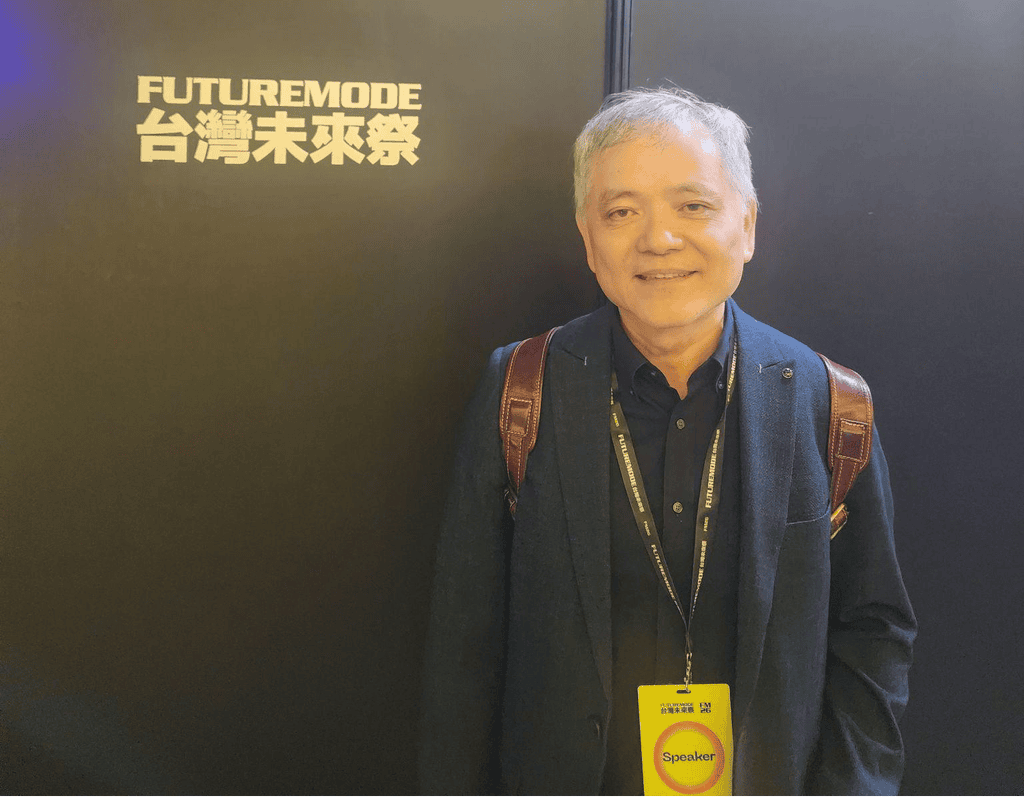
In a separate interview after a FutureMode panel, Eric Chou, chief technology officer of Blockchain Security Corp., said his firm has been commissioned by the unnamed bank to build Model Context Protocol, or MCP, and stablecoin-payment rails for agentic payments in retail and e-commerce scenarios. Chou did not identify the bank or give a launch date.
“One of Taiwan’s largest banks has commissioned us to build the MCP and stablecoin rails for agentic payments in retail and e-commerce scenarios,” Chou said.
That disclosure brings Liu’s scenario down from the presentation screen and into the machinery of regulated finance. The future consumer may ask an AI to find a product and make the payment, but the bank will need to know what the agent is, who authorized it, which wallet or account it may use, what spending limit applies, which merchants it may deal with and whether a transaction meets compliance requirements.
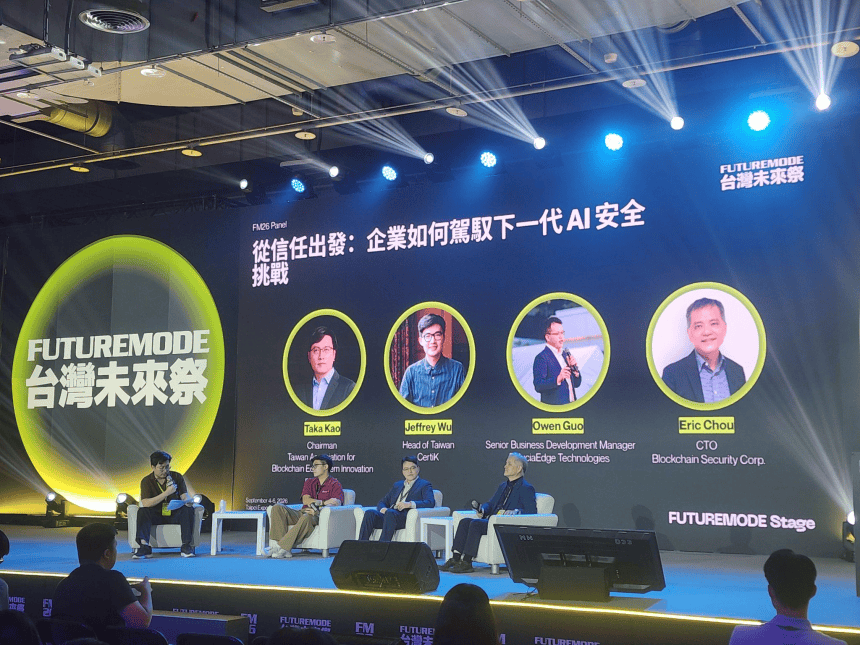
FutureMode, the successor to Taiwan Blockchain Week, gave that infrastructure problem unusual prominence. Liu’s solo Mastercard presentation envisioned agentic commerce moving from product discovery to checkout, while the featured FutureMode panel examined trust, authentication, permissions and auditability. The panel was moderated by Taka Kao, chairman of the Taiwan Association for Blockchain Ecosystem Innovation, and featured Jeffrey Wu, CertiK’s head of Taiwan; Owen Guo, senior BD manager at FudiciaEdge Technologies; and Chou.
From shopping help to payment authority
Liu’s starting point was familiar. Consumers already ask AI systems to compare product brands, features and capacity. Yet, he said, most AI interfaces still lack a credible purchase button. Merchants may not offer APIs that allow AI agents to place orders, while consumers and merchants alike may hesitate to trust an autonomous system with a real transaction.
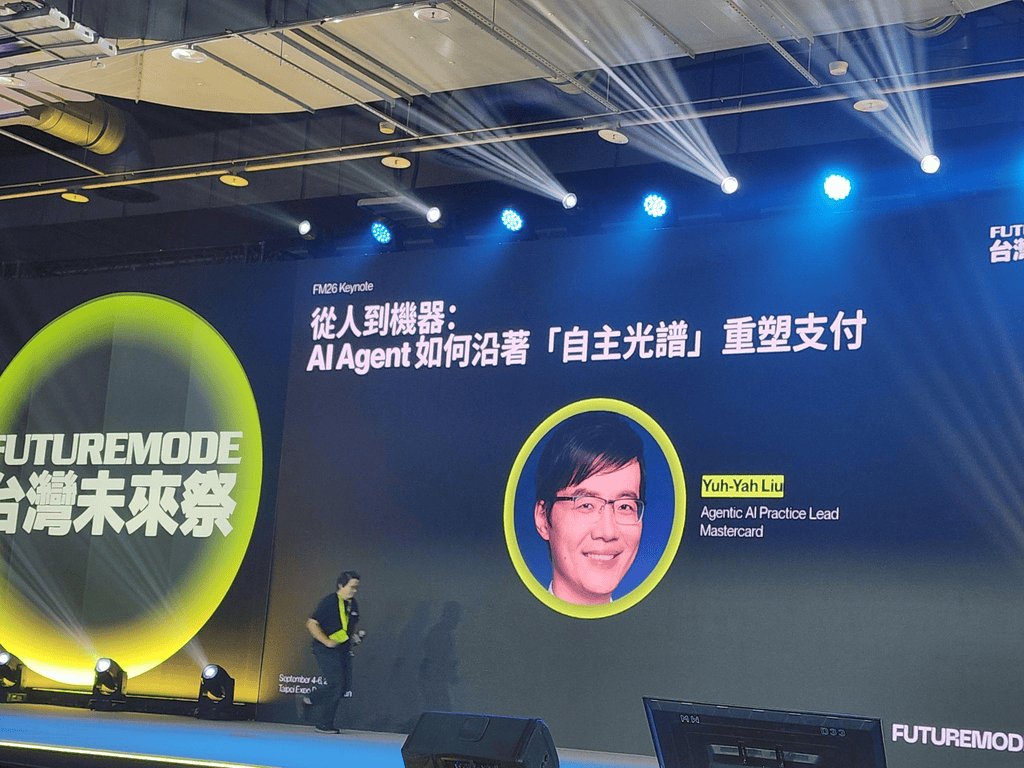
The answer, Liu argued, has two parts: only authorized agents should be allowed into agentic-commerce flows, and each transaction must protect both consumer interests and merchants from malicious activity. Existing card-network authorization and tokenization-style processes can help create those protections, he said.
Liu then pushed the argument beyond agent-assisted shopping. In the longer term, a consumer might set an objective and a total budget rather than approve every transaction one by one. The consumer’s AI agent could then find other specialized agents — representing merchants, service providers or digital workers — and transact under those pre-agreed constraints.
That changes the object of trust. The payer may not be the human at the checkout page. It may be an agent acting under a recorded mandate, with spending limits and defined purposes. The merchant might likewise be represented by software. Stablecoins become relevant because they could provide a natively digital settlement mechanism when agents transact across services, markets and potentially borders.
The panel at FutureMode put a name to the resulting compliance challenge: Know Your Agent, or KYA.
Jeffrey Wu said agentic systems need clear answers to basic but consequential questions: What is the agent’s identity? What permissions does it have? Which keys or wallets can it access? What external tools and skills can it call? Who authorized it, and what did it do?
“First, you need to know who the agent is,” Wu said in substance. “Which company does it belong to, and which skills does it use?” The audit record must then show what permissions the agent received, which version ran, what actions it took, who granted authority and when.
Wu compared the needed record to a food traceability system: a financial institution should be able to reconstruct where an agent came from, which controls it passed and who is accountable after a failure. He said AI agents are already moving closer to real-world assets and execution, raising the need for audit-level trust rather than a one-time security check.
The risk is not theoretical. An agent that can read local files, access email or enterprise credentials, call third-party services and reach a wallet can expose sensitive data or exceed its intended role. “If your counterparty is a sanctioned wallet, the consequence may be more than financial loss,” Wu said. “Your whole operation may face regulatory or sanctions risk.”[
Owen Guo argued that the foundation for that trust sits below the model and user interface, at the hardware and edge-computing layers. Data can be protected in storage and in transit, he said, but it may become exposed when it is being processed.
“If the foundation is not secure, then whatever you build on top of it is not secure,” Guo said, comparing a trusted execution environment to a building’s structural foundation.
That warning matters for retail agentic payments. AI models, customer data, payment credentials and authorization instructions may increasingly run on phones, devices or edge infrastructure rather than only in a bank-controlled data center. A strong identity credential or transaction rule is worth less if the environment processing it can be manipulated.
Chou’s work offers a complementary layer: traceability and explainability. On the FutureMode stage, he described how blockchain-based infrastructure can preserve evidence and establish whether digital materials have been changed. The same requirement applies when agents make financial decisions. A bank must be able to explain why a payment was allowed, why an account or wallet was flagged and what evidence supports the result.
Liu’s agentic-commerce model outlines the consumer proposition: authorize an agent, assign a budget, establish a transaction limit, and permit the agent to transact with merchant agents while using existing payment-network infrastructure for fast authorization and settlement. He also suggested stablecoins could become a natural means of settlement as agent-to-agent markets mature.
Chou’s unnamed bank mandate suggests Taiwan’s financial industry is testing how to make that architecture operational through MCP and stablecoin rails. The project does not establish that a public retail product is imminent; the bank was not named and no timetable was offered. But it does show that one of the country’s largest lenders is already moving closer to the plumbing of agentic commerce than the FutureMode audience may have realized.
The question for Taiwan’s banks is no longer simply whether an AI agent can press “buy.” It is whether they can build a system that proves the agent had authority, limits what it can do, protects the customer and merchant, screens the payment and assigns responsibility if the purchase goes wrong. At FutureMode, the agents got the spotlight. The rails, as usual, may decide whether they go anywhere.
About the Arthur
Joe Pan is an editor and producer at Blockwind News. An early adopter of blockchain technology, he has covered major crypto conferences globally since 2019 and moderated Web3 events across Asia. Joe is part of the founding team of Blockwind News and teaches Asia’s first Master of Journalism course on “Covering Cryptocurrency and Blockchain” at Hong Kong Baptist University.
