


23th October, 2026
By Shubhii Verma
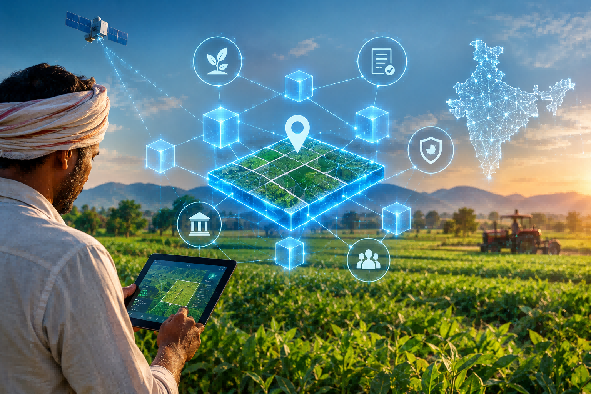
A project backed by the Cardano Foundation has registered 100,000 farm parcels in India with digital identities recorded on the Cardano blockchain, reaching the milestone on October 21, 2026. The initiative aims to make agricultural records easier to verify and reuse, potentially improving smallholder farmers’ access to credit, insurance, and buyers.
How Cardano Blockchain Is Digitizing Indian Farmland Records
Each parcel receives a tamper-resistant digital identity built using satellite-verified data and decentralized identifiers. Records can include crop information and sustainability histories, giving lenders, insurers, and agricultural traders a consistent basis for assessing farms and their production.
The initiative brings together Syngenta Foundation India and the Agri-Entrepreneur Growth Foundation, with technical support from AIQUANT, Anastasia Labs, and Andamio. Work has focused on districts in Maharashtra, including Achalpur and Anjangaon Surji.
Cardano Farmland Registrations Reach 100,000 in India
Registrations have expanded quickly. Pilot activity in April and May 2026 recorded approximately 7,965 to 10,500 farms. By June, registrations had exceeded 15,000, and daily additions reportedly reached 500 during parts of the expansion. The system is designed to support one million farmer registrations, making the current total roughly one-tenth of its stated capacity.
Plans also envisage closer integration with India’s agricultural ecosystem, including potential partnerships involving the World Bank and the International Finance Corporation. These collaborations could connect the registry with institutions supporting financing and rural development, although their future scope and implementation remain important details to watch.
Blockchain Land Records Could Improve Farmers’ Access to Finance
Smallholder farmers often face fragmented records, limited documentation, and repeated requests to prove ownership, production history, or sustainability practices. A shareable digital record could reduce verification friction across financial and commercial services. However, a blockchain entry alone does not guarantee legal title, loan approval, insurance coverage, or buyers for crops. Outcomes depend on data quality, local procedures, institutional adoption, and safeguards for farmers.
Blockwind News ANALYSIS
The milestone matters because it applies blockchain infrastructure to a practical documentation problem rather than relying on token speculation. Yet registrations are an input, not proof of economic impact. The strongest evidence of success will be whether banks accept these records, insurers offer products using them, and farmers receive faster decisions or better terms.
The one-million target offers a measure of scale, but adoption quality matters as much as volume. Farmers need accessible consent processes, correction mechanisms, privacy protections, and clarity over who can access or reuse their data. Satellite verification and tamper resistance can strengthen records but cannot eliminate inaccurate source information or disputes over land rights.
Investors should not assume this registration milestone directly affects ADA’s market price. The project’s longer-term significance depends on measurable outcomes: credit access, insurance uptake, lower verification costs, and sustained participation by agricultural institutions. Another initiative, IndianChain, launched October 8, 2026, focusing on agricultural records and settlements in Telangana, with a different geographic scope.
The ultimate test is whether farmers benefit from the infrastructure, not simply whether more parcels are registered. Transparent implementation and measurable results will determine whether this becomes a model for agricultural digitization.
