


6th November, 2026
By Joe Pan
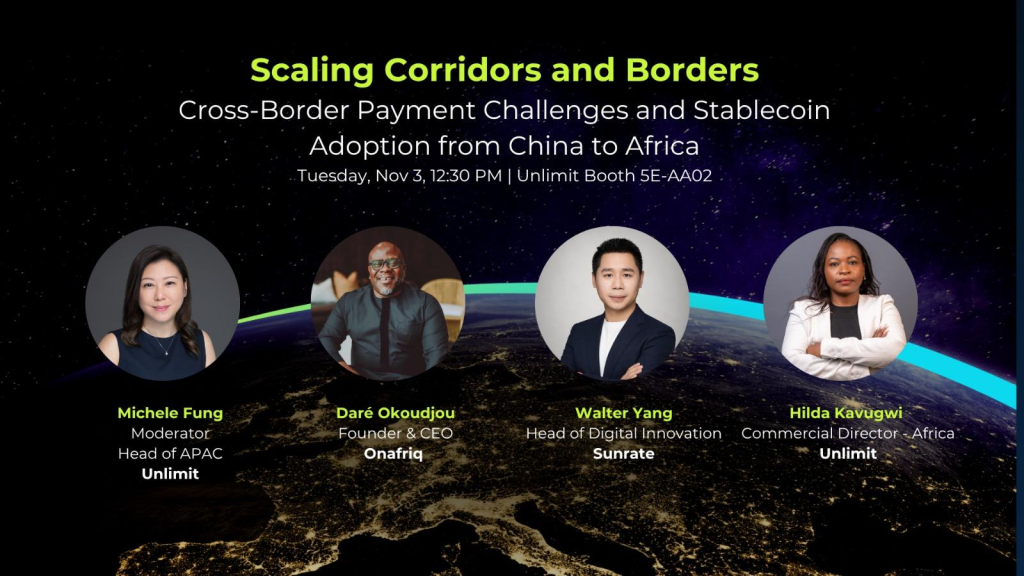
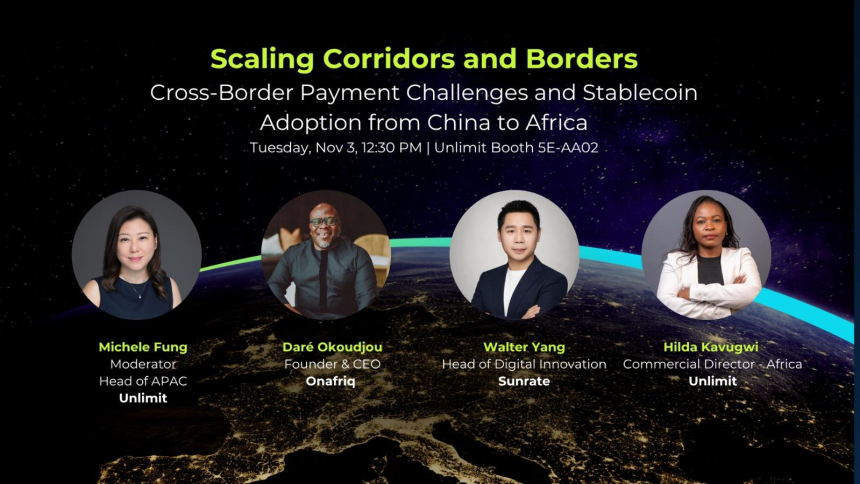
HONG KONG — When Hilda Kavugwi walked into a shop in Guangzhou recently, the owner took one look at the Nigerian trader behind her and shut the doors to other customers. “He knows he’s going to buy everything in that shop,” said Ms. Kavugwi, commercial director for Africa at the payments company Unlimit. “This is just one shop. You can imagine the big manufacturers back in Africa and the kind of business currently happening between Africa and China.”
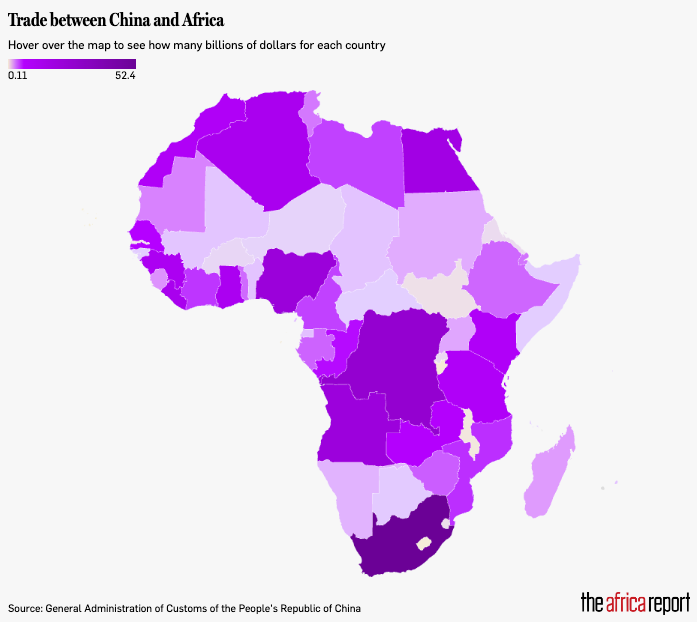
Her anecdote, shared during Hong Kong FinTech Week, captured a trade relationship now measured in the hundreds of billions. China-Africa trade surpassed $348 billion in 2025, up 17.7 percent from a year earlier, and expanded another 22.3 percent in the first nine months of 2026, even as China’s commerce with the United States slumped. China has been Africa’s largest trading partner for 16 consecutive years; Nigeria alone imported a record $24.9 billion in Chinese goods last year according to The Africa Report produced by China’s General Administration of Customs.
Ms. Kavugwi sees both ends of the corridor. “There’s a town in Nairobi — if you go there, you close your eyes and open, you will think you’re in China,” she said of a market district packed with Chinese merchants and Kenyan traders. “It’s always packed, full of people.”
Why Cross-Border Payments Remain a Challenge for China-Africa Trade
Yet the financial plumbing lags behind that commerce. A trader in Lagos cannot convert naira directly into Kenyan shillings at a bank, let alone into yuan. “I will have to convert the Nigerian naira to dollars first, then from dollar to the local currency,” Ms. Kavugwi said. Banks can take more than five days to settle — an eternity for merchants operating on single-digit margins.
Dare Okoudjou, founder and chief executive of Onafriq, a payment network spanning 44 African countries, framed the problem as one of architecture rather than appetite. Mobile money systems like M-Pesa “were really built to solve local problems,” he said. “We are dealing with 54 countries. In each of the countries you have 2 or 3 different currencies and you have your own regulation.” From a factory in Shenzhen, he added, correspondent banking demands Swift codes and bank addresses — “so many information that the average person doesn’t know.”
How Fintech Firms Are Building Faster China-Africa Payment Rails
Walter Yang, head of digital innovation at the Singapore-based payments firm Sunrate, said the fix is neither full bypass nor business as usual. “It’s definitely, definitely a hybrid model right now,” he said, describing how fintechs stitch together clearing networks and compliance checks through APIs. “We’re not entirely replacing banks, but as fintechs we’re building this bridge.”
Where the panel turned candid was on stablecoins — dollar-pegged tokens increasingly used as settlement plumbing between the two continents. Mr. Okoudjou called the appeal practical, not speculative: traders collecting naira care less about when it arrives than “how quickly they move it into something stable.” For merchants without access to credit, speed is working capital.
The elephant in the room is Beijing, which prohibits stablecoin settlement on the mainland. Asked how operators navigate that, Mr. Yang laughed. “When it comes to stablecoin, crypto and mainland China — yeah, no comment,” he said, before praising Hong Kong as an “important environment where we can validate a lot of proof of concepts.” Sunrate recently obtained a mainland payment license — “really good, but it complicates things,” he admitted — and sees the city’s regulatory sandbox as the corridor’s likely on-ramp.
Mr. Okoudjou sketched the endgame as a “stablecoin sandwich”: merchants never choose between fiat and tokens. “All they have to choose is, ‘I am paying to China,'” he said, “and fintech companies make it happen.”

Regulatory and Compliance Barriers to Cross-Border Payments
Compliance, the panelists agreed, is the gate through which everything must pass. “There’s nothing scarier than being called by a regulator,” Ms. Kavugwi said, describing how Unlimit vets clients using government platforms like Kenya’s eCitizen portal. Mr. Okoudjou reached for a railroad metaphor: “You can have very high speed, but it can’t cross the border because the distance of the rails are just different.”
The challenges ahead are considerable. The proportional identity checks that enabled Africa’s mobile money boom mean millions of account holders technically cannot transact across borders at all — “but they need to trade,” Mr. Okoudjou said. “They’re running a business. They want to buy from China.” Regulators across dozens of jurisdictions are only now graduating from sandboxes to full licensing regimes. And the trade itself remains lopsided — Africa’s deficit with China hit a record $102 billion in 2025 as Chinese exports to the continent more than doubled from 2018 levels — raising hard questions about whom the new rails ultimately serve.
Can Stablecoins Transform China-Africa Trade Payments by 2028?
Still, the direction of travel seemed clear to the room. Mr. Okoudjou predicted stablecoin volumes along the corridor would grow five- to tenfold by 2028, likening the technology to “the mobile money of the internet.” As the moderator, Michele Fung, Unlimit’s Head of APAC, put it in closing the session: “The infrastructure is shifting from West-to-East to everywhere-to-everywhere.” For Ms. Kavugwi, the metric is simpler: merchants “don’t want to know how it is done. They just want to know that they received their money.
Mr. Okoudjou predicted stablecoin volumes along the corridor would grow five- to tenfold by 2028, likening the technology to “the mobile money of the internet.”
For Ms. Kavugwi, the metric is simpler: merchants “don’t want to know how it is done. They just want to know that they received their money.”
About the Author
Joe Pan is an editor and producer at Blockwind News. An early adopter of blockchain technology, he has covered major crypto conferences globally since 2019 and moderated Web3 events across Asia. Joe is part of the founding team of Blockwind News and teaches Asia’s only accredited Master of Journalism course on “Covering Cryptocurrency and Blockchain” at Hong Kong Baptist University.
