


7th October 2026
By Anjali Kochhar
South Korean companies are increasingly experimenting with stablecoins for international payments, using overseas affiliates to bypass domestic restrictions while seeking faster and cheaper alternatives to traditional banking channels.
Korean Companies Test Stablecoins Through Overseas Affiliates
Korean businesses currently face limitations on using cryptocurrencies and stablecoins for corporate payments at home. As the country’s regulatory framework remains under development, some companies are testing transactions abroad by converting funds into U.S. dollar-pegged stablecoins, transferring them across borders and converting them back into fiat currency at the destination.
According to blockchain data platform Allium, stablecoin payments linked to goods and services involving Korean companies reached approximately $620 million between January 2021 and September 2026.
Hyundai Tests USDT for Faster Cross-Border Settlement
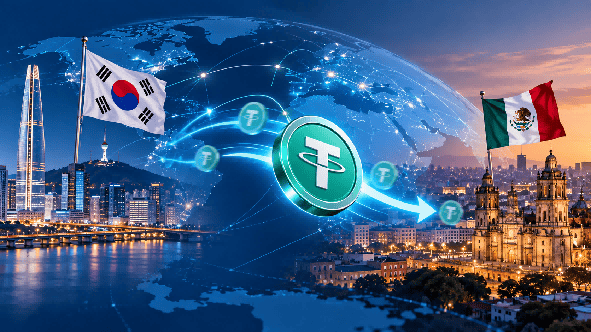
One prominent experiment involved Hyundai Motor America. In July, the company converted $20,000 into USDT and transferred it to an affiliate in Mexico. The recipient then converted the stablecoins back into U.S. dollars. The entire transaction and verification process took about seven minutes, compared with traditional banking transfers that can take several hours.
Hyundai Card, which facilitated the test, is reportedly planning additional trials involving European affiliates. The company is exploring partnerships with firms including Circle and Visa as it assesses the potential of blockchain-based settlement.
Cost is another factor attracting businesses. Stablecoin remittances between the United States and Mexico can carry fees below 1%, while traditional channels can average more than 6%, according to figures cited from a World Trade Organization report.
Interest is also extending beyond major conglomerates. Smaller Korean businesses are reportedly using overseas partners, including those in Hong Kong, to facilitate stablecoin transactions, particularly when international trading partners request digital-asset payments.
Korean Banks and Corporates Expand Blockchain Payment Trials
Meanwhile, several Korean financial and industrial companies are developing their own blockchain payment experiments. Posco International is working with Hana Financial Group and Dunamu on blockchain-based cross-border remittances. Shinhan Bank has also completed a proof-of-concept with LX International, while Coupang and Woori Bank have tested real-time settlement using won-backed stablecoins.
Korea’s upcoming Digital Asset Basic Act is expected to address stablecoin regulation, with the Financial Services Commission planning to submit the framework by November.
Blockwind News Analysis
Stablecoins are increasingly shifting from primarily crypto-market instruments toward payment infrastructure for global businesses. Korea’s regulatory delay, however, could push domestic companies to establish long-term payment relationships in jurisdictions such as Hong Kong and Singapore. If those networks become deeply established, Korea may find that introducing domestic stablecoin regulations later does not automatically bring transaction activity back home. Faster regulatory clarity could therefore become a competitiveness issue for Korea’s export-driven economy rather than simply a question of crypto policy.
