


2nd July, 2026
By Anjali Kochhar
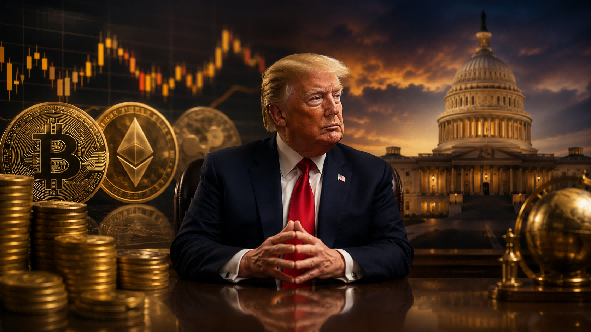
Trump’s Cryptocurrency Earnings Surge to $1.4 Billion
Donald Trump’s latest financial disclosure, revealing more than $1.4 billion in cryptocurrency-related income during 2025, is more than a personal financial milestone. It offers a striking illustration of how political power and private wealth have become increasingly intertwined. For critics, the bigger story is not simply the scale of Trump’s crypto fortune, but the fact that a sitting US president and his family are accumulating extraordinary wealth from business ventures that have expanded while his administration pursues policies widely seen as favourable to the digital asset industry. That raises difficult questions about ethics, democratic accountability and whether America’s traditional guardrails against conflicts of interest remain effective.
The disclosure indicates that the bulk of Trump’s earnings came from crypto ventures linked to World Liberty Financial and Trump-branded meme coins. These businesses have grown alongside an administration that has championed a more crypto-friendly regulatory environment, eased oversight and promoted the United States as a global hub for digital assets. The White House has argued that there is no conflict of interest because Trump’s business interests are managed by his family. Even so, ethics experts contend that the overlap between policymaking and personal financial gain creates at least the appearance of a conflict, especially when presidential decisions can directly influence markets tied to family-controlled businesses.
Crypto as a Major Driver of Trump’s Wealth
Beyond the political controversy, the filing reflects a broader economic transformation. For decades, Trump’s wealth was built on real estate, hotels, golf resorts and licensing deals. Cryptocurrency now appears to have become one of the most significant drivers of his fortune, highlighting how digital assets have evolved from a speculative niche into a sector capable of generating immense wealth and political influence.
The implications extend beyond Trump himself. His success could further legitimise cryptocurrencies among conservative voters and institutional investors who were once sceptical of the sector. At the same time, critics argue that it sets a precedent in which the financial interests of a president’s family become increasingly intertwined with public policy, testing long-standing norms designed to separate public office from private enrichment. Whether that reflects a broader erosion of democratic safeguards or simply the emergence of new financial realities will remain a subject of fierce debate.
Ethical Questions and Democratic Safeguards
Ultimately, the disclosure is about more than Trump’s balance sheet. It highlights how cryptocurrency has moved to the centre of both finance and politics, while reigniting questions over whether existing ethics rules are equipped to deal with an era in which a president’s personal business empire can prosper alongside the policies of the administration he leads.
