


1st July, 2026
- Q. Stablecoins are increasingly becoming the preferred medium for cross-border payments. How is MuffinPay adapting its strategy, and do you see stablecoins overtaking traditional remittance rails in Asia?
- Q. Asia is witnessing rapid digital payment growth, but regulations differ significantly across markets. Which countries stand out for Web3 payment adoption?
- Q. Crypto wallets, private keys and on-chain transactions still intimidate many users. What are the biggest user experience challenges, and how is MuffinPay addressing them?
- Q. Regulators across Asia are strengthening compliance requirements for crypto businesses. How do you balance innovation with KYC, AML and licensing obligations?
- Q. Looking ahead, what role will AI play in crypto payments?
- Q. Several large fintech companies are entering digital asset payments. What gives a specialised player like MuffinPay an advantage?
- Q. Cross-border commerce is expanding rapidly across Southeast Asia and the Middle East. How important are these corridors to MuffinPay’s long-term strategy?
- Q. Finally, what can users and the broader Web3 ecosystem expect next from MuffinPay?
By Anjali Kochhar
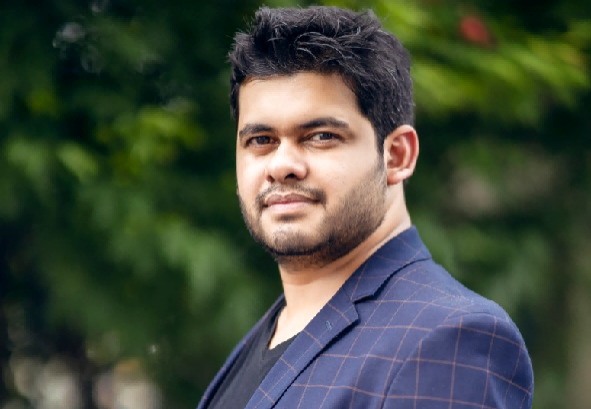
Our correspondent Anjali Kochhar spoke with Dileep Seinberg, Founder of MuffinPay, a Web3 neobank building infrastructure for real-world crypto payments. In this conversation, he discusses the rise of stablecoins, Asia’s evolving regulatory landscape, AI-driven financial services, and why blockchain must become invisible for mainstream adoption.
Q. MuffinPay positions itself as a Web3 neobank focused on real-world crypto payments. In 2026, what has been the biggest shift in consumer behaviour that convinced you crypto payments are moving beyond speculation into everyday utility?
Dileep Seinberg: The biggest behavioural shift is that people are no longer asking, “Which token should I buy?” Instead, they’re asking, “What can I actually do with my digital assets?” That change signals that the market is maturing.
Consumers increasingly expect crypto to function like everyday money. They want to pay bills, transfer funds internationally, shop with merchants, and manage their finances without worrying about borders or banking hours. Stablecoins have accelerated this transition because they remove the volatility that once discouraged spending digital assets.
At MuffinPay, we’ve always believed that the future of Web3 lies in utility rather than speculation. Our focus is to build financial infrastructure where blockchain powers transactions in the background while users simply experience faster, seamless payments.
Q. Stablecoins are increasingly becoming the preferred medium for cross-border payments. How is MuffinPay adapting its strategy, and do you see stablecoins overtaking traditional remittance rails in Asia?
Dileep Seinberg: Stablecoins address some of the biggest inefficiencies in international finance—high costs, slow settlement, and dependence on multiple intermediaries. Transactions that traditionally take days can now settle within minutes, around the clock.
We’ve built MuffinPay around stablecoin infrastructure rather than treating it as an additional feature. Users can make bill payments, transfer funds, and settle cross-border transactions using regulated stablecoins without needing to understand the underlying blockchain technology.
While traditional banking infrastructure won’t disappear overnight, I do believe stablecoins will increasingly become the preferred settlement layer behind many financial services across Asia over the next few years.
Q. Asia is witnessing rapid digital payment growth, but regulations differ significantly across markets. Which countries stand out for Web3 payment adoption?
Dileep Seinberg: Asia is far from homogeneous, so every market requires a different approach.
Singapore and Hong Kong continue to lead because they have established relatively clear regulatory frameworks that encourage innovation while maintaining oversight. The UAE has also emerged as an important bridge between Asia and the Middle East through progressive digital asset policies.
India remains one of the most exciting long-term opportunities. Its mature digital payments ecosystem, strong developer community, and scale make it an ideal market once regulatory clarity evolves further. We’re also closely watching Indonesia, Vietnam and the Philippines, where growing remittance flows and mobile-first consumers create strong demand for efficient Web3 payment solutions.
Q. Crypto wallets, private keys and on-chain transactions still intimidate many users. What are the biggest user experience challenges, and how is MuffinPay addressing them?
Dileep Seinberg: The biggest obstacle isn’t blockchain itself—it’s complexity.
Most consumers shouldn’t need to understand gas fees, wallet addresses, seed phrases or multiple blockchain networks simply to make a payment. Our philosophy is straightforward: blockchain should remain invisible.
We’re designing experiences that feel as intuitive as modern fintech applications while blockchain quietly handles settlement, transparency and interoperability in the background. If we succeed, users won’t think they’re using blockchain at all—they’ll simply notice that payments are faster, cheaper and borderless.
Q. Regulators across Asia are strengthening compliance requirements for crypto businesses. How do you balance innovation with KYC, AML and licensing obligations?
Dileep Seinberg: We don’t see compliance as a barrier to innovation. We see it as a prerequisite for sustainable innovation.
Institutional adoption will only accelerate if regulators, financial institutions and consumers trust the ecosystem. From the beginning, we’ve embedded compliance into our platform through strong KYC processes, AML screening, transaction monitoring and risk management.
The challenge is ensuring that compliance remains seamless rather than burdensome. Automation enables legitimate users to complete verification with minimal friction while maintaining high regulatory standards.
Q. Looking ahead, what role will AI play in crypto payments?
Dileep Seinberg: AI will fundamentally change how people interact with financial services. Rather than navigating multiple applications, users will simply tell an AI assistant what they want to accomplish.
For example, someone could ask an AI assistant to pay a utility bill using the most cost-effective stablecoin route or convert digital assets into local currency when exchange rates become favourable. AI will optimise execution, detect fraud, reduce costs and personalise financial decisions in real time.
Blockchain provides trust and settlement, while AI delivers intelligence and automation. Together, they have the potential to redefine digital banking.
Q. Several large fintech companies are entering digital asset payments. What gives a specialised player like MuffinPay an advantage?
Dileep Seinberg: Large institutions undoubtedly bring scale, but specialised companies bring agility.
Traditional financial institutions often spend years modernising legacy infrastructure. We’re building directly on blockchain-native architecture, allowing us to innovate faster, integrate emerging technologies more efficiently and respond quickly to evolving customer needs.
Our advantage lies in focus. We’re not digitising legacy banking systems—we’re designing an entirely new financial experience built for a borderless digital economy.
Q. Cross-border commerce is expanding rapidly across Southeast Asia and the Middle East. How important are these corridors to MuffinPay’s long-term strategy?
Dileep Seinberg: These markets are central to our growth strategy.
Trade, freelancing, tourism, migration and digital commerce between Asia and the Middle East continue to expand, yet cross-border payments remain fragmented and unnecessarily expensive.
The greatest opportunity lies in serving SMEs, freelancers, digital creators and globally connected businesses that still rely on outdated payment infrastructure. Our objective is to create a seamless financial layer that enables instant, compliant and affordable value transfer across these regions.
Q. Finally, what can users and the broader Web3 ecosystem expect next from MuffinPay?
Dileep Seinberg: We’re entering an exciting phase of expansion.
Our roadmap includes strengthening global bill payment capabilities, scaling stablecoin-based cross-border settlements and integrating AI-powered financial experiences that simplify digital asset management. We’re also expanding partnerships across the payments, fintech and blockchain ecosystem to improve interoperability.
Our broader ambition is to evolve into a complete Web3 neobank where users can manage digital assets, make global payments, access financial services and participate in the decentralised economy through one secure, intuitive platform. Ultimately, our goal is simple: make blockchain invisible while making global finance more accessible to everyone.
