


24th July 2026
By Joe Pan
The Emerging Payments Association Asia (EPAA) has launched an industry-wide working group dedicated to defining the liability, identity, and authentication standards for agentic commerce, a move industry leaders say is essential to scaling automated payments across the Asia Pacific region.
On 20 July, the EPAA AI & Agentic Payments Working Group, which includes founding member HSBC, announced its intent to establish a governance framework for AI agents capable of executing autonomous B2B and consumer payments. As agentic commerce—the use of AI software to initiate and complete transactions without human intervention—accelerates, the region faces a critical regulatory void regarding accountability.
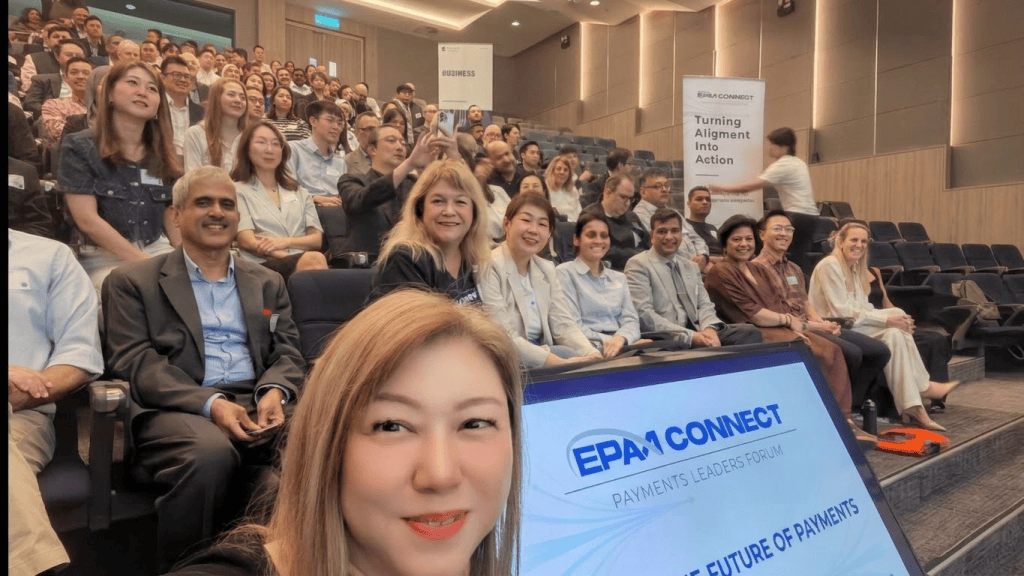
EPAA Forms AI & Agentic Payments Working Group
“AI agents are transacting across Asia Pacific right now, at scale, at machine speed, and without the regulatory architecture to protect businesses and consumers,” said Camilla Bullock, CEO of the Emerging Payments Association Asia. “The organisations that help build these frameworks now will shape how agentic commerce works across Asia Pacific for the next decade.”
The initiative comes as the market for agentic commerce in APAC is projected to expand at a compound annual growth rate of nearly 45% through 2031, according to data from Mordor Intelligence. Despite this projected growth, the industry currently lacks unified standards for distinguishing legitimate agent behavior from compromised accounts, or assigning liability when software initiates a fraudulent or erroneous transaction.
Current legal regimes, which rely on concepts of human intent and direct causation, are ill-equipped for a machine-led financial system. “The IMF noted earlier this year that current liability regimes ‘assume human intent and direct causation’,” the EPAA stated in its launch announcement, highlighting a growing legal ambiguity for AI agents that settle B2B invoices or initiate subscription renewals.
Convergence of Policy and Technology
The push for standardized governance has become a focal point of recent industry gatherings. At the Money20/20 Asia summit in Bangkok earlier this year, policymakers and central bankers emphasized a shift toward “Intelligence-Led Governance.” A strategic roundtable on sovereign intelligence reached consensus on three strategic pillars, including the need for shared governance protocols for cross-border financial rails.
Speaking at Money20/20 Europe in June, industry leaders echoed this urgency. Regulators and financial institutions are grappling with the reality that AI and digital identity cannot be managed in isolation. Ruth Wandhöfer, CEO of Leximar Advisory, noted, “In an increasingly global financial system, regulatory cooperation and practical alignment will become just as important as technological innovation”.
The EPAA working group plans an 18-month engagement process with ASEAN and APEC governments to deliver formal policy recommendations at the 51st ASEAN Summit and APEC Economic Leaders’ Week in November 2027.
Building Trusted Rails
For banks like HSBC, the move is rooted in customer trust. Nicholas Soo, Managing Director and Asia Head of Payment Products, Global Payments Solutions at HSBC, emphasized that automation must be supported by transparent risk management. “Our pilot agentic commerce transactions have demonstrated how B2B transactions can be executed end-to-end with control, transparency, and risk management from the start,” Soo said.
The challenge of “Know Your Agent” (KYA) is increasingly recognized as a prerequisite for institutional adoption. During panel discussions at Money20/20 Europe, experts warned that the industry is approaching a threshold where traditional fraud models—built to detect human behavior—create false positives when analyzing machine-speed agentic patterns.
According to a Lexology analysis cited by the working group, if liability models similar to the UK’s 50/50 APP fraud reimbursement policy were applied to agentic AI, aggregate financial exposure could be significant due to the speed at which AI agents operate.
Collaboration as Strategy
The drive toward common standards mirrors a broader trend observed across the Asian fintech ecosystem: a shift toward collaboration over disruption. As Bullock of EPAA recently observed, the core technology exists, but scaled disruption requires participants to treat basic infrastructure as “shared ground” rather than a competitive battlefield. “Collaborate to innovate,” Bullock said, a mantra she argues should be placed outside every major fintech event in Asia.
This sentiment is central to the working group’s roadmap. The group plans to develop practical toolkits, briefings, and intelligence for members while lobbying for frameworks that reflect contemporary digital realities rather than legacy systems. Places for both committee and working group levels remain open until November 2026.
As the industry converges on these new rails, the focus remains on balancing innovation with security. “The true value of money lies in its velocity,” noted Dhanum Nursigadoo, Content Manager at Money20/20, during the presentation of the book The New Intersection of Money. “Moving traditional rails over to DeFi platforms significantly accelerates that speed, creating immense structural benefits”. By building the regulatory scaffolding now, the EPAA aims to ensure that velocity does not come at the expense of systemic stability.
Join the working group
Places on the AI & Agentic Payments Working Group, both at committee level (10–12 organisations) and working group level (up to 30 organisations), are open to EPAA member organisations across the APAC payments ecosystem. Organisations interested in joining should contact EPAA before November 2026: https://emergingpaymentsasia.org/contact/
About the Author:
Joe Pan is an editor and producer at Blockwind News. An early adopter of blockchain technology, he has covered major crypto conferences globally since 2019 and moderated Web3 events across Asia. Joe is part of the founding team of Blockwind News and teaches Asia’s first Master of Journalism course on “Covering Cryptocurrency and Blockchain” at Hong Kong Baptist University.
