


May 07, 2026
By Shubhii Verma
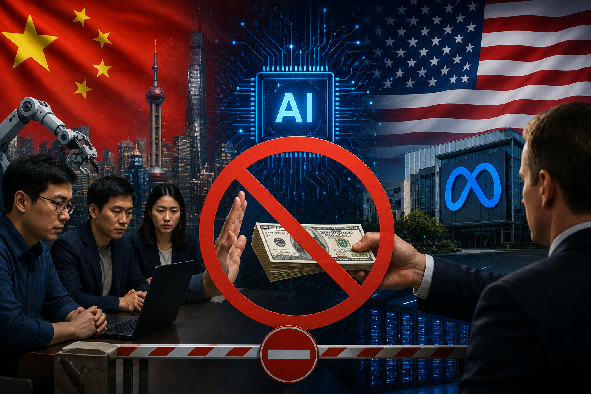
China has told its artificial intelligence (AI) startups to be very careful about taking money from American companies. According to reports, the government has instructed these firms to reject US funding unless they first get official approval.
This decision comes after Meta Platforms bought Manus AI, a Chinese AI startup, in a deal worth about $2 billion. The acquisition has added to the growing tension between the United States and China over control of advanced technologies like AI. Both countries have already placed restrictions on each other’s tech companies, and this move shows that the rivalry is getting more serious.
Chinese authorities are worried that foreign investments, especially from the US, could lead to important technology and knowledge leaving the country. In the case of Manus AI, the government has reportedly stopped its founders from leaving China. Officials say this is because of concerns about violations related to foreign investment rules and the possible transfer of sensitive technology to the US.
This action is part of a wider strategy by China in its ongoing tech and trade competition with the United States. Instead of only using tariffs and trade rules, both countries are now using investment restrictions and tighter regulations to protect their own technology sectors and limit the influence of the other side.
Financial markets are watching these developments closely. Some investors believe this situation could create problems for Meta’s future growth in AI, especially if Chinese startups become harder for US companies to invest in or acquire. This could limit Meta’s access to new AI talent and technology from China.
At the same time, the impact on the broader tech sector is still uncertain. For example, predictions about NVIDIA’s future market value show only a moderate level of concern, suggesting that while the situation is important, it may not immediately harm all tech companies in the same way.
Experts say the key thing to watch is whether China introduces more rules that make it harder for US companies to invest in or work with Chinese tech firms. It will also be important to see how the US government responds. Future policy changes, along with earnings reports from major tech companies, may show how deeply these political tensions are affecting business strategies and global technology markets.
