


May 04, 2026
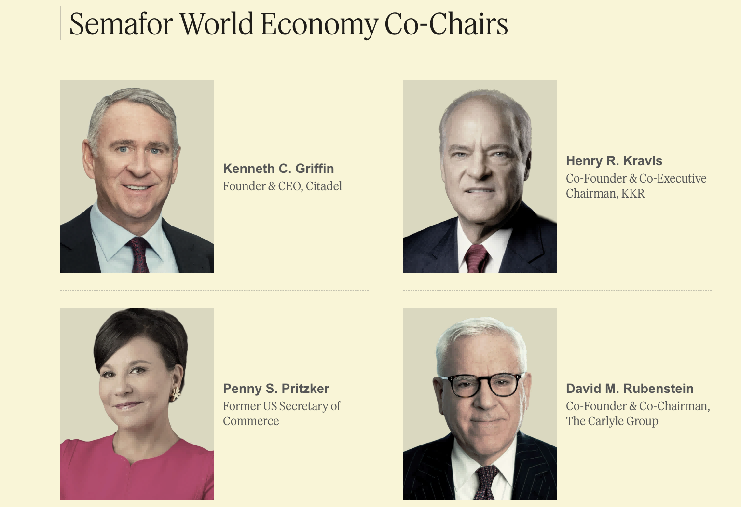
BANGKOK — Washington intel, not just conference chatter, was what Animoca Brands President Evan Auyeung brought back to Money20/20 Asia after attending the Semafor World Economy summit in Washington, D.C. The takeaway from those conversations was blunt: if the United States fails to move on digital-asset market structure and stablecoin clarity within a narrow policy window, it risks ceding momentum to jurisdictions such as Hong Kong, the United Arab Emirates and Europe.
That matters well beyond Washington. For payments and digital-asset executives in Asia, the question is no longer simply whether the U.S. can pass crypto legislation, but whether delay will reshape where regulated tokenized-money infrastructure gets built, where cross-border settlement standards are set, and how long the dollar can retain an unchallenged lead in an increasingly programmable financial system.
At Semafor World Economy, Auyeung said what struck him most was how strongly the event — often seen as an American answer to Davos — felt anchored in Washington’s own political orbit. “I think a quarter of the congressmen actually showed up,” he said, describing that level of congressional presence as striking and as a sign of how U.S.-centric the discussion had become. Because of the conference’s proximity to Washington, “the participants were very much focused in the U.S.,” he said, adding that there “weren’t that many people from Asia” and “not that many people from Hong Kong,” unlike the more global mix he is used to seeing at Davos, Milken or Saudi Arabia’s FII. In his view, that imbalance in representation also meant that discussions around China, AI and industrial policy were being framed largely through a domestic U.S. political lens, even though those debates carry direct implications for Asia’s role in the next phase of digital assets and stablecoins.
Auyeung described the political window in unusually stark terms. “If we don’t get this done in the next couple of months, it might be several years before you get that same support,” he said. He added that failure would restore the kind of uncertainty that previously held the U.S. market back: “If we don’t get this done, there’s a lot of lack of clarity in the U.S. context that can get the U.S. back to where it was in terms of regulatory uncertainty [and] lowers the competitiveness of digital assets as a strategy for America.” Even so, he said the pressure may be creating some momentum. “There is a little bit more optimism that it should be able to get done. But this is a window of probably in the next four to six weeks.”
At Semafor, he said, the mood in Washington was shaped by concerns extending far beyond crypto. “The dominant themes in D.C. were really around the war and AI,” Auyeung said. Those themes, he argued, are feeding a more fundamental anxiety in U.S. politics and business. “One thing that’s thematically very, very clear that both sides agree on is the disappearance, or the lack, of what we call ‘American certainty’ — certainty in terms of how the U.S. will behave geopolitically in terms of predictability, and how American businesses can plan ahead if there’s so much uncertainty.”
That uncertainty is one reason stablecoin regulation now looks more strategic than technical. Auyeung said the issue is no longer just whether Washington can pass a digital-asset bill, but what happens if it does not while rivals move ahead. “If America takes its gas off the pedal by not passing clarity and not having market structure, what does that mean for other parts of the world — especially when you see the stablecoin act in Hong Kong and how Hong Kong goes after Web3, and other jurisdictions like the UAE?” he said. “What does that mean relative to American competitiveness and the dominance of those dollars? That’s the part that really matters.”
Back in Bangkok, that Washington readout fed directly into his argument for treating stablecoins as part of mainstream financial architecture, not a crypto side show. Asked whether the word “stablecoin” first suggests crypto or payments, Auyeung answered: “It’s tokenized money. It’s a new form of money.” He framed it as part of a longer arc in payments evolution: “To me, it’s an evolution of means of transfer — from cash to cashless, then to credit cards, and now to programmable money.”
On the institutional case, his emphasis was on settlement quality and operating efficiency. Asked what friction point stablecoins could most immediately improve, he answered: “atomic settlement 24 by 7,” and then added, “low cost.” If traditional financial institutions fully integrate stablecoin rails, he said, the gains would show up across speed, cost and capital efficiency, changing the shape of financial intermediation itself.
He also rejected the idea that stablecoins are still waiting for real-world usage. “It is already being massively used,” he said, arguing that the bigger bottleneck now is not demand but the availability of regulated stablecoins across multiple jurisdictions. In his view, payment providers can already make use of less formal structures, but large institutional and B2B flows require regulated issuance frameworks and clearer rules.
That is why he repeatedly returned to mutual recognition across borders. Technology, he suggested, is already capable of near-instant settlement. Regulation is not. The real question is whether a regulated U.S. dollar stablecoin can pair cleanly with a regulated Hong Kong dollar stablecoin, and whether those instruments can move across borders with legal certainty. Right now, he said, “the regulations are not communicating with each other,” making clarity, consistency and mutual recognition the main barriers to larger-scale adoption.
Beyond payments, Auyeung sees the next financial stack forming at the intersection of blockchain, real-world assets and agentic AI. He argued that software agents naturally use tokens, and that blockchains are more legible than traditional banking rails for machine-driven execution, settlement and delegation. In that sense, blockchain may become not just a system for people moving money, but a native operating layer for agents transacting on behalf of people.
That helps explain why Animoca is leaning further into regulated stablecoins, RWAs and broader agentic infrastructure. Auyeung said the company expects on-chain assets to expand because the efficiency gains in settlement and cost are too substantial to ignore. In that framework, stablecoins are not peripheral to tokenization. They are the liquidity and settlement layer that makes tokenized markets usable at scale.
Hong Kong remains central to that thesis. Auyeung argued that the city matters not only because it is a financial center, but because it sits at the intersection of capital, regulation and Chinese-linked assets. A credible Hong Kong dollar stablecoin regime, combined with meaningful RWA development, could make the city strategically important far beyond its own domestic market.
The conclusion from Auyeung’s Washington readout was blunt. The United States has not lost the stablecoin race, but it is in danger of losing the advantage of assumed leadership. If Washington hesitates while Hong Kong, Abu Dhabi, Dubai and Europe keep formalizing their rule books, the next chapter of digital finance may be written not where the dollar was born, but where regulation is clear enough to let tokenized money move.
About the Author
Joe Pan is an editor and producer at Blockwind News. An early adopter of blockchain technology, he has covered major crypto conferences globally since 2019 and moderated Web3 events across Asia. Joe is part of the founding team of Blockwind News and teaches Asia’s first Master of Journalism course on “Covering Cryptocurrency and Blockchain” at Hong Kong Baptist University.
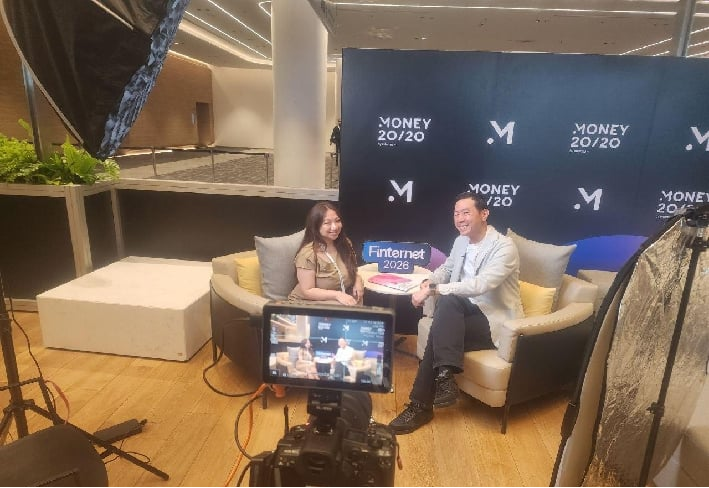
This article is based on a joint interview with Evan Auyeung conducted by Melizza Anievas, producer and host of the Finternet podcast, during Money20/20 Asia in Bangkok.
